
Start learning Levantine Arabic online or in person with experienced native Levantine Arabic teachers in lessons designed with beginners in mind.
Our Beginner Levantine Arabic Lessons concentrate on spoken Arabic (Ammiya), giving you the words, phrases, pronunciation, and conversation skills you need for everyday life.
No previous Arabic is required. Whether you are learning for travel, family, volunteering, work, study, cultural interest, or daily communication, our lessons give you a solid foundation and get you speaking with confidence early on.
You can study through one-to-one private classes or small group courses, depending on availability, from anywhere in the world and on a schedule that suits you. You can also learn in person at our centers in Hebron (Palestine), Amman (Jordan), and Damascus (Syria).
Table of Contents
Why Learn Levantine Arabic?
Levantine Arabic, also called Shami, is the spoken Arabic of Palestine, Jordan, Syria, and Lebanon, and millions of people use it in daily life.
Learning Levantine Arabic can help you:
- Talk with friends, family, and communities from the Levant.
- Get ready for a trip to Palestine, Jordan, Syria, or Lebanon.
- Follow everyday conversations.
- Handle real-life situations with more confidence.
- Communicate while volunteering or working in the region.
- Build a closer connection with the culture and people.
- Develop practical speaking and listening skills.
- Lay the groundwork for further Arabic study.
Our beginner lessons teach spoken Levantine Arabic rather than only formal Arabic, so from the start you learn language you can use in real conversations.
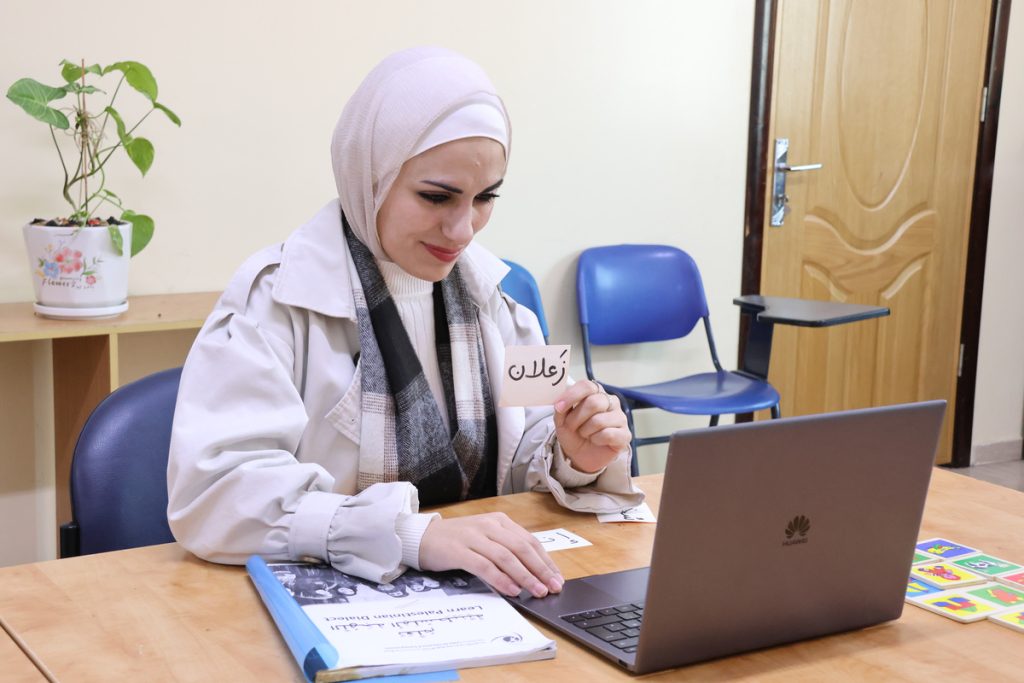
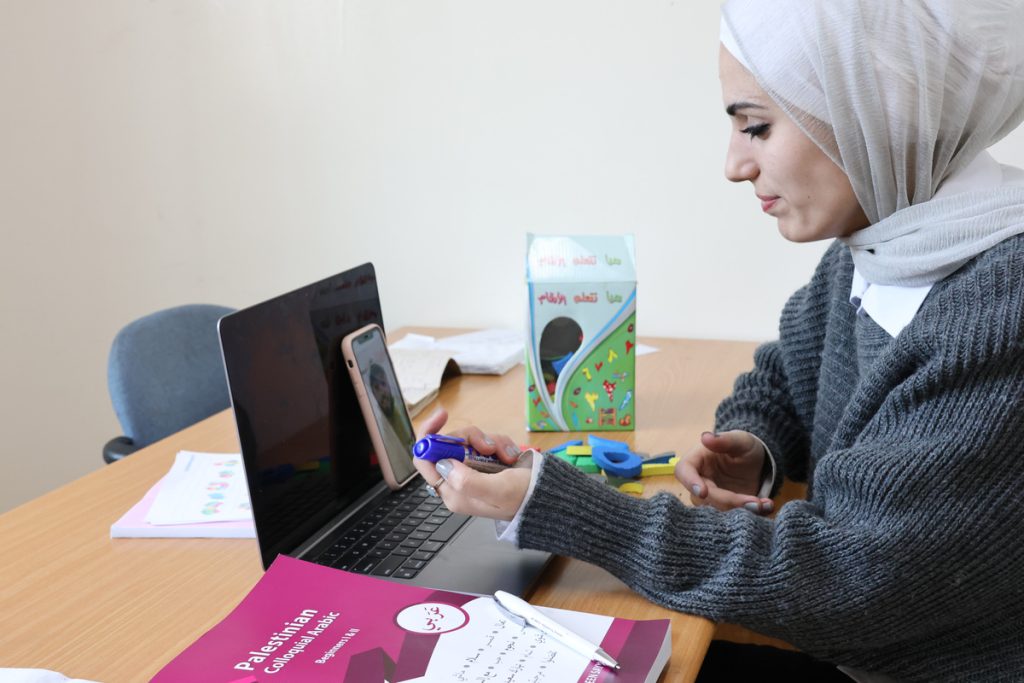
What Is Levantine Arabic?
Levantine Arabic is the family of spoken Arabic varieties used across the Levant. It includes four main varieties: Palestinian, Jordanian, Syrian, and Lebanese Arabic.
These varieties are used in everyday conversation, while Modern Standard Arabic (MSA) is generally reserved for formal writing, education, official communication, and similar settings.
The four varieties share most of their grammar and much of their vocabulary, with differences in pronunciation and some words and expressions. As a beginner, you can learn Levantine Arabic in general or focus on the variety you are most interested in, and your teacher will teach you the forms that are most useful for your goals.
If you want to talk naturally with people from the Levant, spoken Levantine Arabic is the ideal place to begin.
What Will You Learn as a Beginner?
Our beginner lessons guide you step by step from your first Arabic words to simple conversations.
Depending on your goals and pace, your course can include the following areas.
Greetings and Introductions
Learn how to:
- Say hello and goodbye.
- Introduce yourself.
- Ask and answer simple questions.
- Say where you come from.
- Talk about your family.
- Use common Levantine greetings and polite expressions.
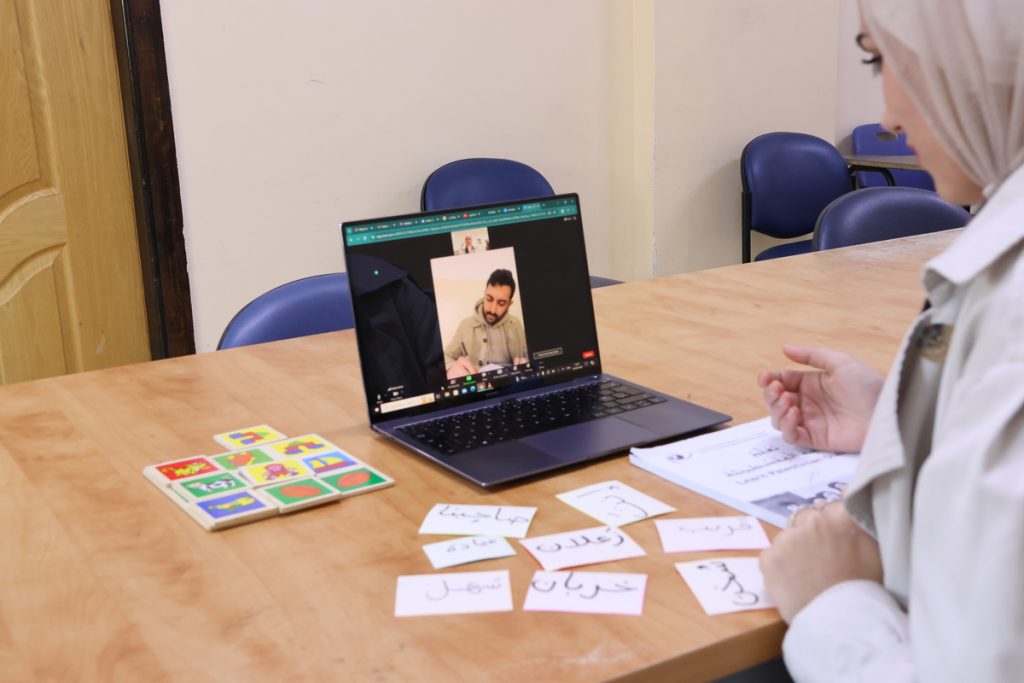
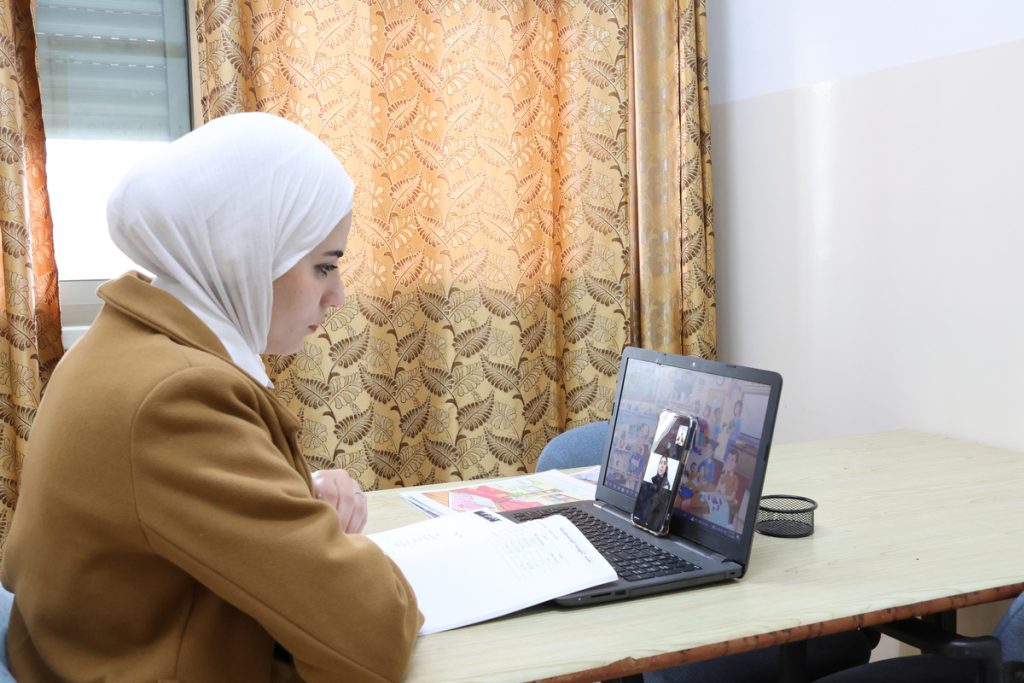
Everyday Levantine Arabic
Build useful vocabulary and phrases for situations such as:
- Shopping
- Restaurants and cafés
- Getting around by bus or taxi
- Asking for directions
- Meeting new people
- Family conversations
- Daily routines
- Numbers and prices
- Telling the time and giving dates
- Food and drinks
Speaking and Conversation
From your first lessons, you will practice using Levantine Arabic in short conversations.
You will learn to ask questions, answer naturally, describe simple situations, and join everyday exchanges.
Pronunciation
Some Arabic sounds take practice for new learners. Your teacher will help you recognize and produce Levantine Arabic sounds so that you speak clearly and naturally.
Listening
You will train your ear to understand common Levantine words, phrases, questions, and short conversations.
Listening practice plays a big role in our beginner lessons, because understanding spoken Arabic is essential for real communication.
Basic Grammar
Grammar is introduced gradually, always through practical examples.
Beginner lessons can cover:
- Pronouns
- Masculine and feminine forms
- Singular and plural
- Basic sentence patterns
- Asking questions
- Verb patterns
- Common present and past forms
- Possession
- Negation
Your teacher introduces grammar according to your level and goals, without burying you in rules you do not need yet.
Reading and Writing
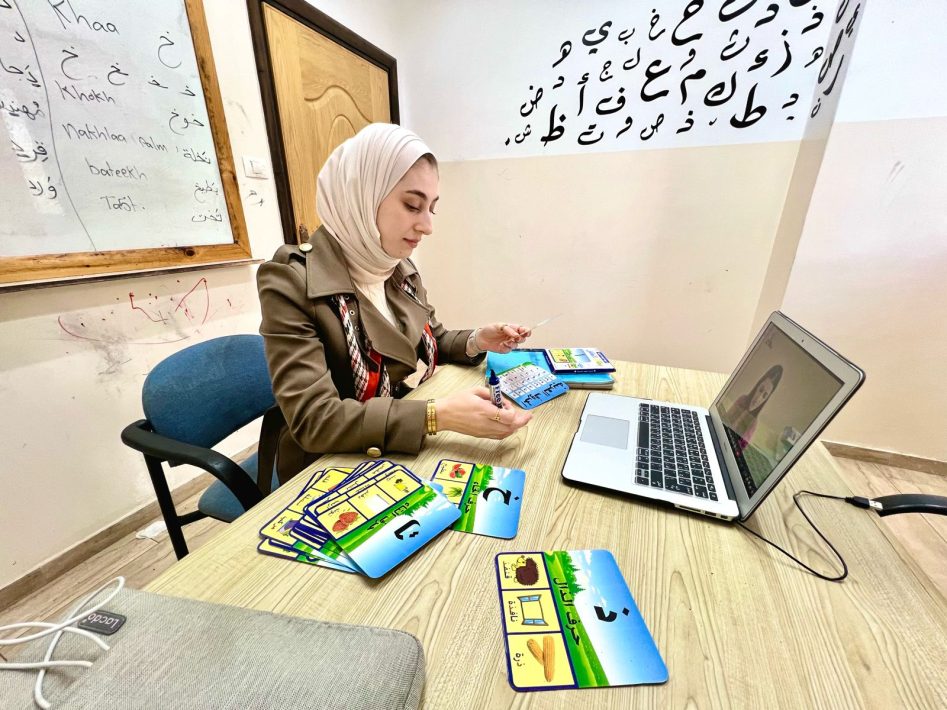
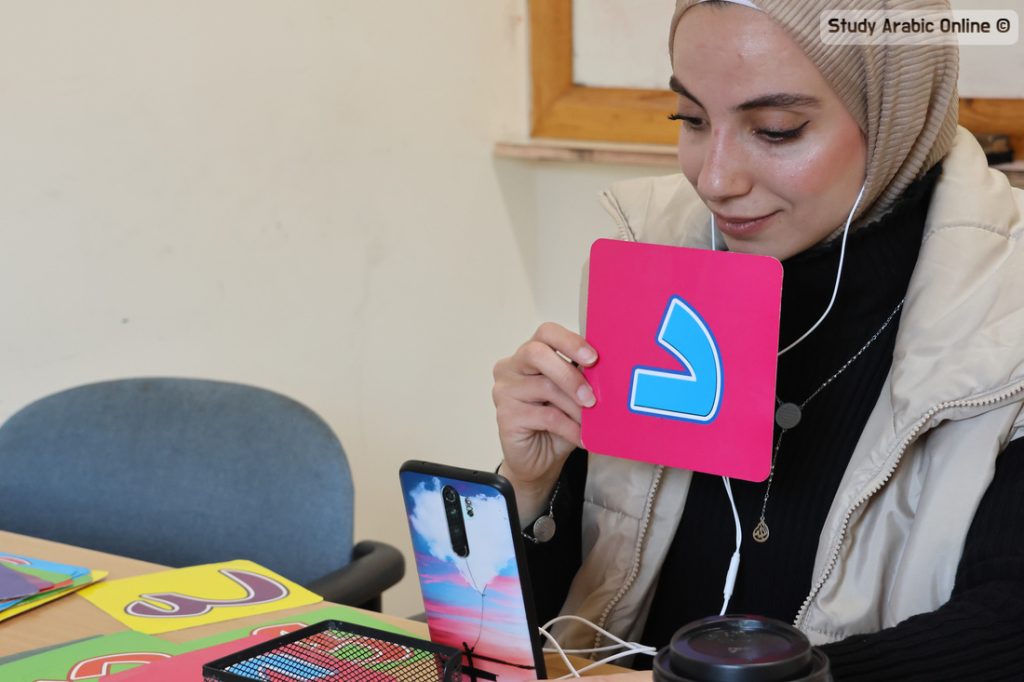
If you would like to learn the Arabic alphabet, reading, and writing, these skills can be added to your beginner program alongside spoken Levantine Arabic.
You can learn:
- The Arabic letters
- How letters change shape and connect
- Basic reading
- Writing simple words and sentences
- Reading everyday Levantine vocabulary
Levantine Arabic for Absolute Beginners
You do not need to speak any Arabic before your first lesson.
Our beginner Levantine Arabic lessons can start from the very basics, including greetings, pronunciation, vocabulary, and simple conversations.
A typical beginner path might look like this:
Starter Level: Learn greetings, introductions, numbers, common phrases, and core vocabulary.
Beginner Level: Hold simple conversations, understand common questions, talk about yourself and your daily life, and manage everyday situations.
Elementary Level: Grow your vocabulary, sharpen your listening, use longer sentences, and take part in extended everyday conversations. From here, you are ready to move on to intermediate Levantine Arabic lessons.
Your teacher sets the pace based on your previous language experience, your goals, and how much time you can study.
Levantine Arabic for Travel
Planning a trip to the Levant?
Our beginner lessons can prepare you with useful language before you go, or you can start learning in person once you arrive in Hebron, Amman, or Damascus.
You can focus on practical situations such as:
- Greeting people.
- Ordering food.
- Shopping.
- Asking for directions.
- Using public transportation.
- Checking into accommodation.
- Meeting locals.
- Understanding common expressions.
- Having short conversations.
Even basic Levantine Arabic makes everyday interactions smoother and helps you communicate more confidently while you travel.
Levantine Arabic for Volunteering
If you are preparing to volunteer in the Levant, basic Levantine Arabic helps you talk with local people and feel more at home in daily situations.
Your lessons can focus on practical vocabulary for:
- Community activities
- Meeting people
- Asking questions
- Sharing information
- Working alongside local communities
- Everyday social situations
The course can be shaped around the type of volunteer work you will be doing.
Levantine Arabic for Family and Cultural Connection
Many of our students learn Levantine Arabic because they have family roots in Palestine, Jordan, Syria, or Lebanon, or because they want to communicate with friends and communities from the region.
In that case, your lessons can concentrate on:
- Family vocabulary
- Everyday conversations
- Typical Levantine expressions
- Greetings and social language
- Phrases commonly used at home
- Cultural norms in communication
Spoken Levantine Arabic helps you follow the kinds of conversations that a traditional Modern Standard Arabic course rarely covers.
Learn with Native Levantine Arabic Teachers
At Study Levantine Arabic School, you study with experienced native teachers who know the language and culture of the Levant firsthand.
Our teachers teach international students at every level and adapt their lessons to each learner.
Your teacher can help you improve your:
- Speaking
- Listening
- Pronunciation
- Vocabulary
- Conversation
- Grammar
- Reading
- Writing
Above all, your lessons can focus on the Levantine Arabic you actually want to use.
One-to-One Lessons for Beginners
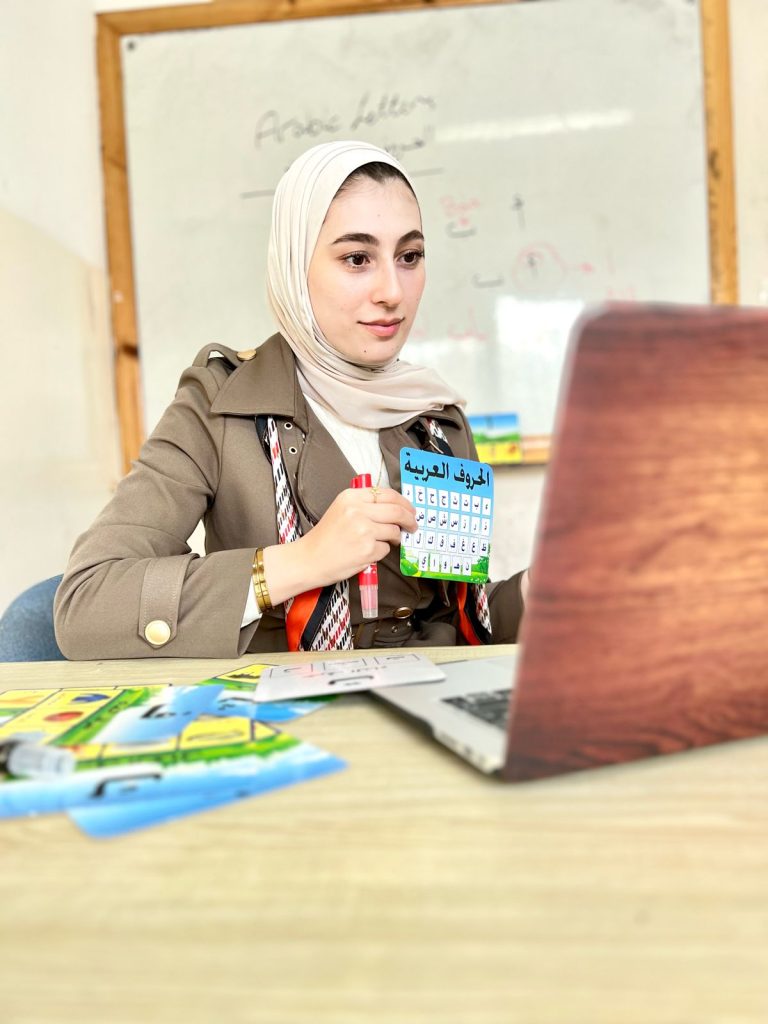
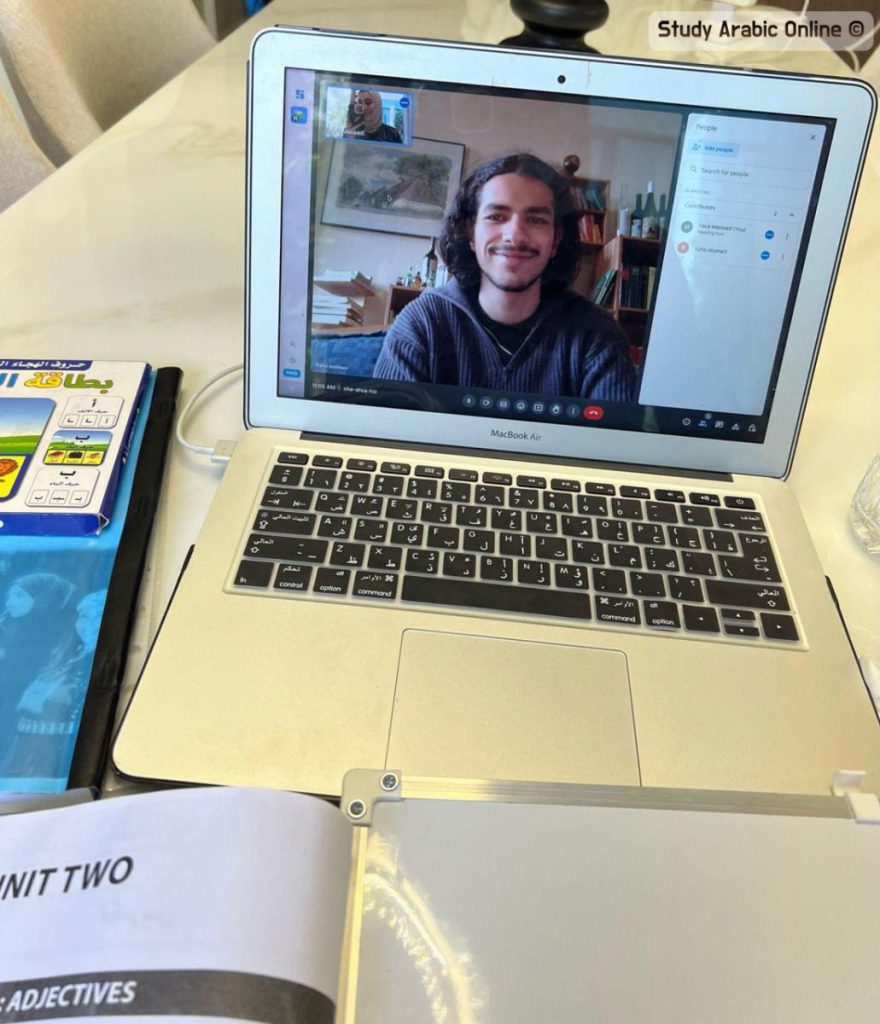
Our one-to-one beginner lessons give you a fully personalized learning experience, online or in person.
Working directly with your teacher means your lessons can be tailored to your:
- Arabic level
- Learning goals
- Interests
- Schedule
- Learning pace
- Favorite topics
Private lessons are ideal if you want to prepare for specific situations, such as travel, family conversations, volunteering, work, or a stay in the Levant.
Group Courses for Beginners
If you enjoy learning with others, you can also join a beginner Levantine Arabic group course, online or at one of our centers, depending on availability.
Group lessons let you:
- Practice conversations with other learners.
- Hear a range of different voices.
- Take part in interactive activities.
- Review vocabulary and grammar together.
- Learn in a social setting.
- Gain confidence through regular speaking practice.
Group courses run according to course schedules and student demand.
Flexible Lessons Online and in Person
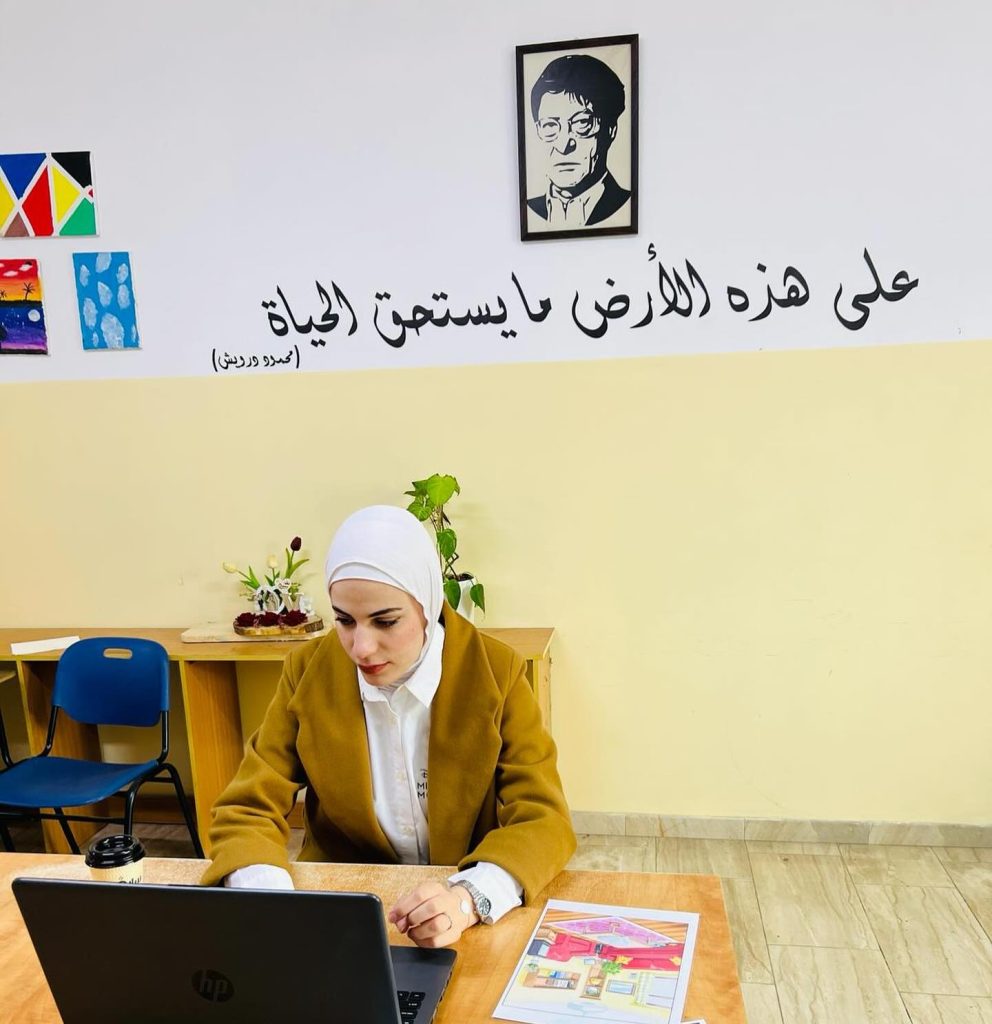
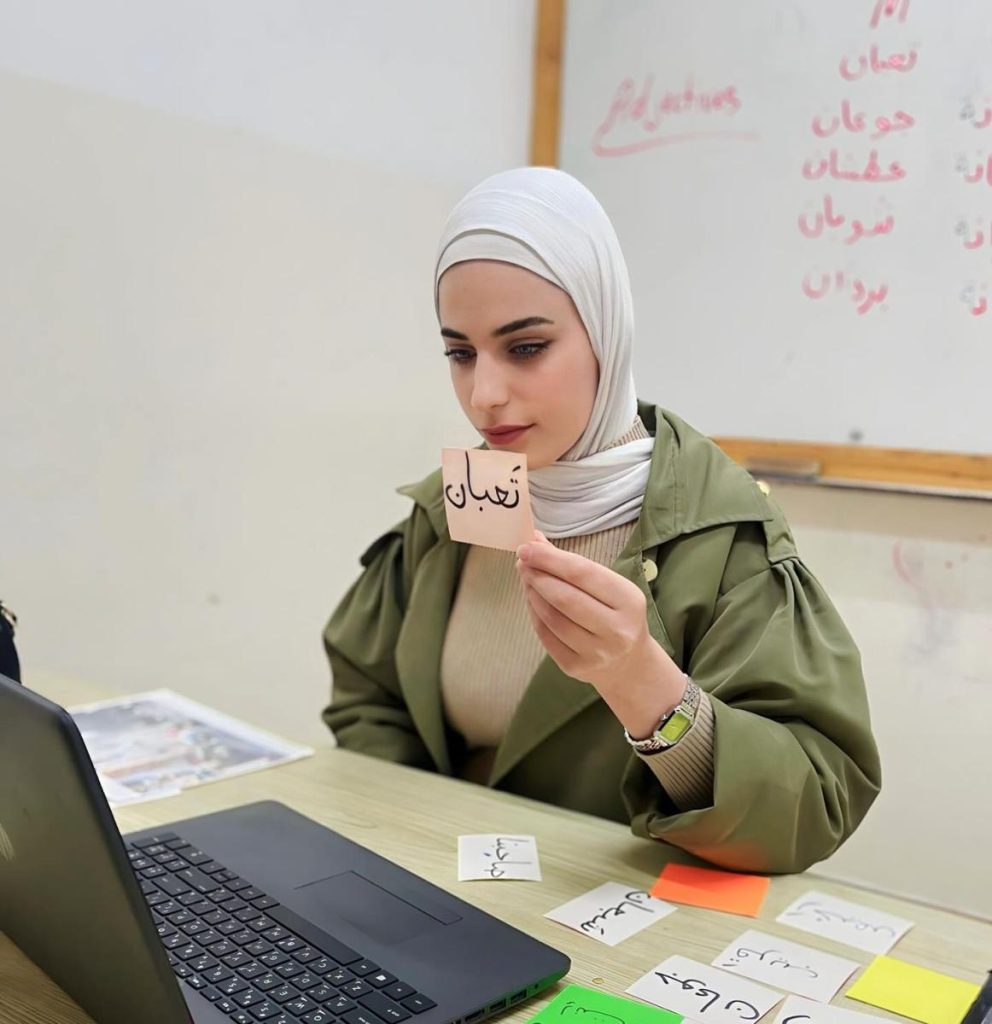
Our Levantine Arabic lessons take place online, so you can learn from anywhere. We also offer in-person lessons in Hebron, Amman, and Damascus for students who want to learn Arabic in the region.
You organize your online lessons around your own schedule and time zone, or plan your in-person lessons around the dates of your stay.
Depending on your goals, you can choose a relaxed pace or an intensive program with several lessons per week.
Our programs include:
- Private one-to-one lessons
- Small group classes
- Intensive Levantine Arabic courses
- Customized Arabic programs
- Lessons in Palestinian, Jordanian, Syrian, or Lebanese Arabic
- Arabic for travel and volunteering
- In-person Arabic programs in Hebron, Amman, and Damascus
How Many Hours Should a Beginner Study?
The right number of hours depends on your goals and the time you have available.
Some beginners like to study a few hours each week and build their skills gradually. Others choose an intensive schedule because they need Levantine Arabic soon for travel, volunteering, work, or an upcoming stay in the region.
Your teacher will help you find a schedule that suits your goals.
Beginner Levantine Arabic Course Overview
| Course Feature | Details |
|---|---|
| Course | Beginner Levantine Arabic Lessons |
| Main Focus | Spoken Levantine Arabic (Shami / Ammiya) |
| Varieties | Palestinian, Jordanian, Syrian, and Lebanese Arabic |
| Level | Complete beginners, Starter, Beginner, Elementary |
| Format | One-to-one private lessons or small groups |
| Lesson Length | 45 minutes per lesson |
| Schedule | Flexible |
| Study Options | Regular, intensive, or customized |
| Skills | Speaking, listening, pronunciation, vocabulary, grammar, reading, and writing |
| Specialized Learning | Travel, volunteering, family, work, study, and everyday communication |
| Teachers | Experienced native Levantine Arabic teachers |
| Location | Online, or in person in Hebron, Amman, and Damascus |
| Trial Lesson | Free Arabic trial lesson available |
Levantine Arabic or Modern Standard Arabic?
Beginners often ask whether they should start with Levantine Arabic or Modern Standard Arabic.
It depends on your goals.
If you mainly want to talk with people from Palestine, Jordan, Syria, or Lebanon, Levantine Arabic is the most useful place to start.
If you need Arabic mostly for formal writing, academic work, reading, news, or official communication, Modern Standard Arabic may be the better fit.
Many students end up learning both.
At Study Levantine Arabic School, you can focus on spoken Levantine Arabic and add Modern Standard Arabic whenever it becomes useful for your goals.
Free Levantine Arabic Trial Lesson
Not sure whether our lessons are right for you? Book a free Levantine Arabic trial lesson.
The trial lets you meet your teacher, talk about your goals, ask questions, and see what an Arabic lesson with us feels like. You can also discuss your current level, how many hours you would like to study, and whether you prefer online or in-person lessons. This helps us understand what you need and suggest a suitable learning program.
Start Learning Levantine Arabic
You do not have to know any Arabic to get started.
Our Beginner Levantine Arabic Lessons take you from the basics to practical, everyday communication, one step at a time, whether you study online or in person.
Whatever your reason for learning, whether travel, volunteering, family, work, study, or personal interest, your lessons can be customized around your goals.
Learn key vocabulary, improve your pronunciation, practice everyday conversations, and gain the confidence to speak with people across the Levant.
Begin your Levantine Arabic journey with an experienced native teacher.
How to Register
Signing up is easy. Email us at Info@studyarabic.org and let us know your Arabic level, your goals, your preferred schedule, whether you would like to study online or in person, and whether you would like to study Levantine Arabic in general, a specific variety such as Palestinian, Jordanian, Syrian, or Lebanese Arabic, or Modern Standard Arabic.
We will match you with a suitable native teacher and learning program. You can choose one-to-one lessons or a small group course, with schedules ranging from a few hours per week to intensive study.
You can also start with a free trial lesson to meet your teacher, talk about your goals, and try a lesson before your course begins.
Summary
Beginner Levantine Arabic Lessons help complete beginners build practical spoken Arabic through personalized learning, online or in person in Hebron, Amman, and Damascus. The focus is spoken Levantine Arabic (Shami), with Palestinian, Jordanian, Syrian, and Lebanese options and Modern Standard Arabic available according to your goals.
You can study in private one-to-one lessons or in a group and work on speaking, listening, pronunciation, vocabulary, grammar, reading, and writing. Whether you need Levantine Arabic for travel, volunteering, family, work, study, or daily life, your course is built around what you need.
Book a free trial lesson and start learning Levantine Arabic with an experienced native teacher.
Contact Us
If you have any questions, please feel free to contact us at:
Website: https://ecpalestine.org/
EC Website: https://excellencenter.org/
Instagram: https://www.instagram.com/excellence.center
Facebook page: https://www.facebook.com/ExcellenceCenter